If you’ve been paying attention to the tech world lately, you’ve probably noticed artificial intelligence and SEO are becoming inseparable. From ChatGPT writing essays to AI assistants booking your appointments, artificial intelligence is reshaping how we interact with technology. Naturally, this raises a big question for anyone who depends on Google traffic: Will AI replace Google rankings?
The short answer? It’s complicated. Let’s dive into how AI is changing search engine optimization and what it means for your website’s visibility.
AI is the engine. SEO is the roadmap. Success needs both.
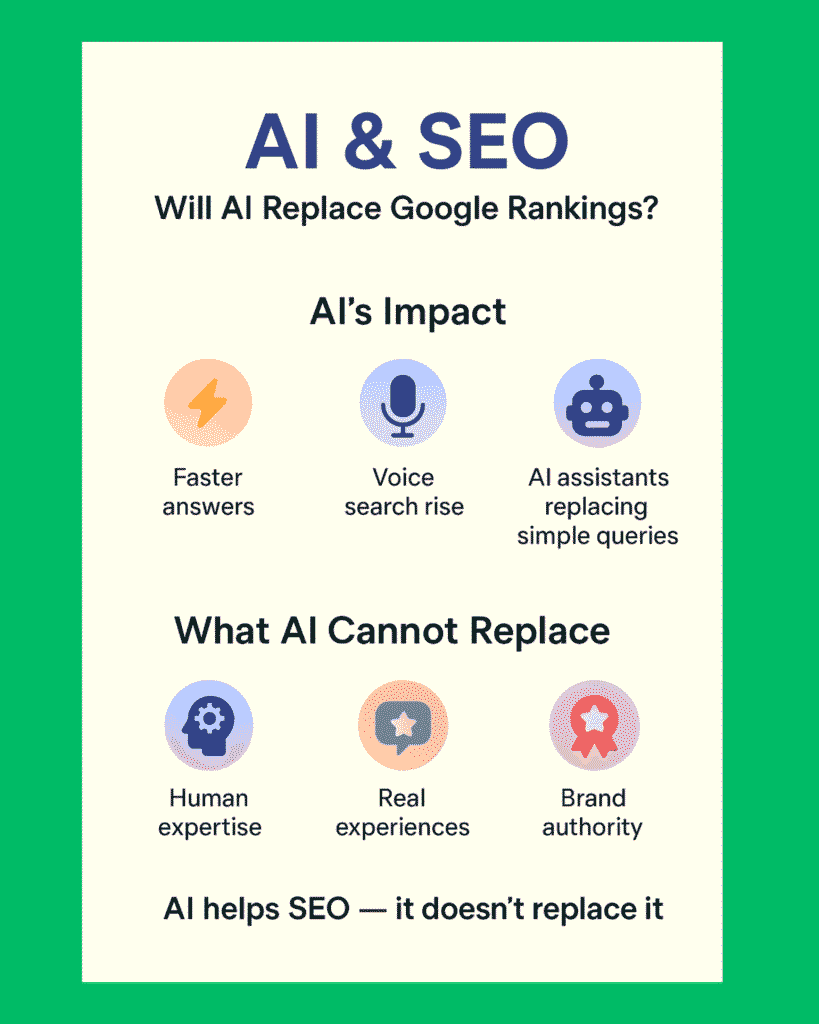
The Search Landscape is Shifting: AI-Powered Search Results
Google isn’t the same search engine it was five years ago. You’ve probably noticed it yourself search engine results now feature AI–generated summaries, quick answers, and increasingly sophisticated snippets that often answer your question without you even clicking a link.
Google’s Search Generative Experience (SGE) and other AI-powered search features are fundamentally changing how people find information. Instead of scrolling through ten blue links, users are getting AI-compiled answers right at the top of the page. This means the traditional “rank #1 and win” strategy isn’t as simple anymore for search engine rankings.
Will AI Kill Traditional Rankings?
Here’s where perspectives diverge on the future of SEO.
The optimists argue that Google rankings aren’t going away they’re just evolving. Yes, AI summaries might reduce clicks for simple queries like “What temperature should I bake chicken?” But for complex topics, in-depth reviews, personal experiences, and trustworthy expertise, people will still click through to actual websites. You can’t build a relationship with an AI summary or trust it with important decisions.
The pessimists worry that AI-generated answers will capture so much attention that organic traffic will plummet. Why visit a website when the AI gives you everything you need? For publishers relying on website traffic, ad revenue, or affiliate links, this could be devastating.
The realists (where I land) believe we’re entering a hybrid era. Traditional search rankings matter, but they’re sharing the spotlight with AI-powered search features. The websites that thrive will be those that adapt to AI and search engine optimization.
What About AI-Generated Content and SEO?
Here’s another twist: AI doesn’t just change how people search—it changes how content creation happens. Tools like ChatGPT and SEO tools can pump out blog posts in minutes. Does this mean everyone can rank easily now with AI content?
Not quite. Google’s algorithm has been clear: they don’t penalize AI-generated content simply for being AI-created. What they care about is quality content, expertise, and value. An AI-written article filled with generic fluff won’t outrank genuinely helpful, well-researched content—whether it’s written by a human or with AI assistance.
The smart approach? Use AI tools for SEO as helpers, not replacements. Let them assist with research, outlines, or drafts, but add your unique insights, experiences, and personality. That’s what AI can’t replicate in content optimization.
SEO Strategies for the AI Era
If you’re a content creator, blogger, or business owner worried about your SEO strategy, here’s the game plan for optimizing for AI search:
Focus on E-E-A-T (Experience, Expertise, Authoritativeness, Trustworthiness). Google’s ranking factors increasingly reward content that demonstrates genuine expertise and firsthand experience. Share your unique perspective, case studies, and real-world examples—this is crucial for content ranking.
Optimize for AI summaries and featured snippets. Structure your content with clear headings, concise answers, and well-organized information. If AI is going to summarize your content in search results, make it easy to extract the good stuff through proper on-page SEO.
Don’t abandon traditional SEO fundamentals. Keywords, backlinks, technical SEO—these fundamentals still matter for search engine rankings. AI hasn’t replaced them; it’s added a new layer to SEO best practices.
Create content AI can’t duplicate. Personal stories, original research, detailed tutorials, and community engagement are all things that make your content irreplaceable. Focus on high-quality content that provides real value.
Embrace voice search and natural language. With AI-powered search becoming more conversational, optimize for how people actually talk and ask questions. Think about long-tail keywords and semantic search.
The Bottom Line - AI and the Future of Search Rankings
Will AI replace Google rankings? Not exactly. It’s more accurate to say AI is transforming SEO and what rankings mean and how people discover content. The rules are changing, but the game isn’t over for digital marketing and search visibility.
The websites that succeed in this AI-driven search era will be those that provide genuine value, adapt to new formats, and understand that SEO isn’t just about pleasing algorithms—it’s about serving real people with real needs.
Artificial intelligence is a powerful tool in the search ecosystem, but it’s not the final boss. Your expertise, authenticity, and willingness to evolve? Those are your competitive advantages in SEO and AI. And no AI can take that away.
What do you think? Are you optimistic or worried about AI’s impact on search? The conversation about AI and SEO is just getting started.